12 Ingredients to Avoid in Commercial Dog Food
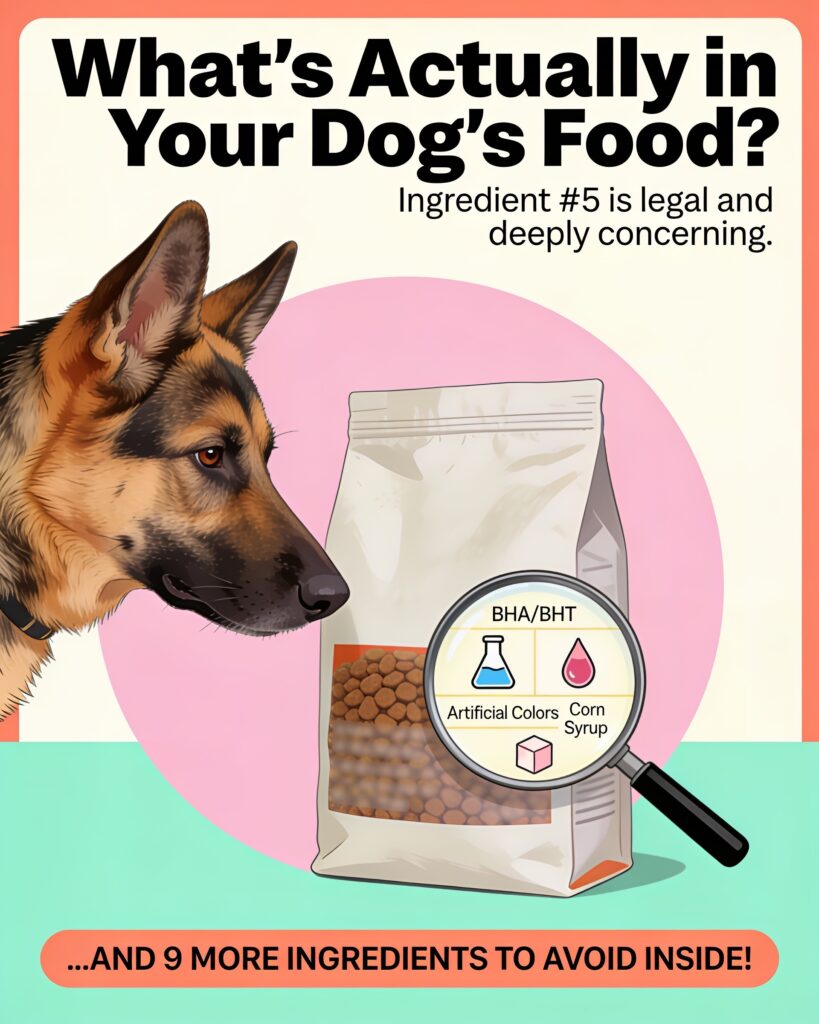
The pet food industry is worth billions and not all of it is spent on your dog’s wellbeing. Many commercial dog foods contain ingredients that are cheap to produce, legal to include, and genuinely harmful over time. Reading a dog food label is a skill worth developing, and these 12 ingredients are the ones worth knowing by name.
1. BHA and BHT
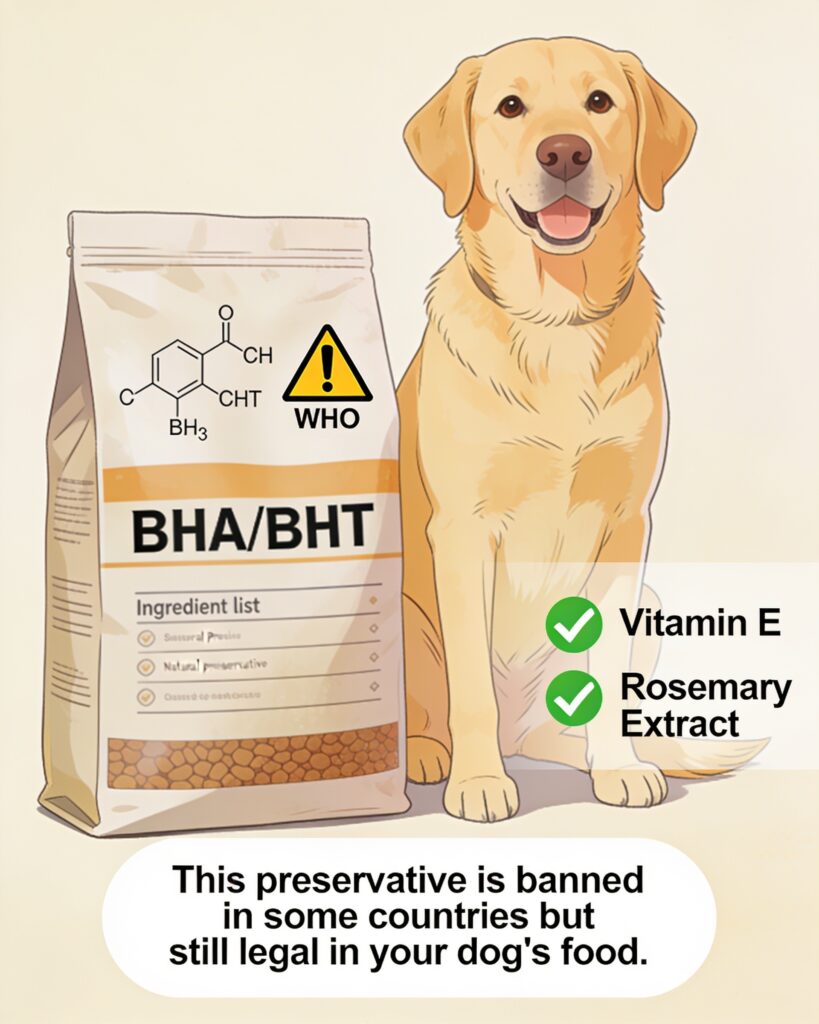
Butylated hydroxyanisole (BHA) and butylated hydroxytoluene (BHT) are synthetic preservatives used to extend shelf life. Both are listed as possible carcinogens by the World Health Organization and have been linked to kidney and liver damage in animal studies. They’re cheap and effective at preservation which is why they’re still widely used despite the concerns. Look for foods preserved naturally with mixed tocopherols (vitamin E) or rosemary extract instead.
2. Ethoxyquin
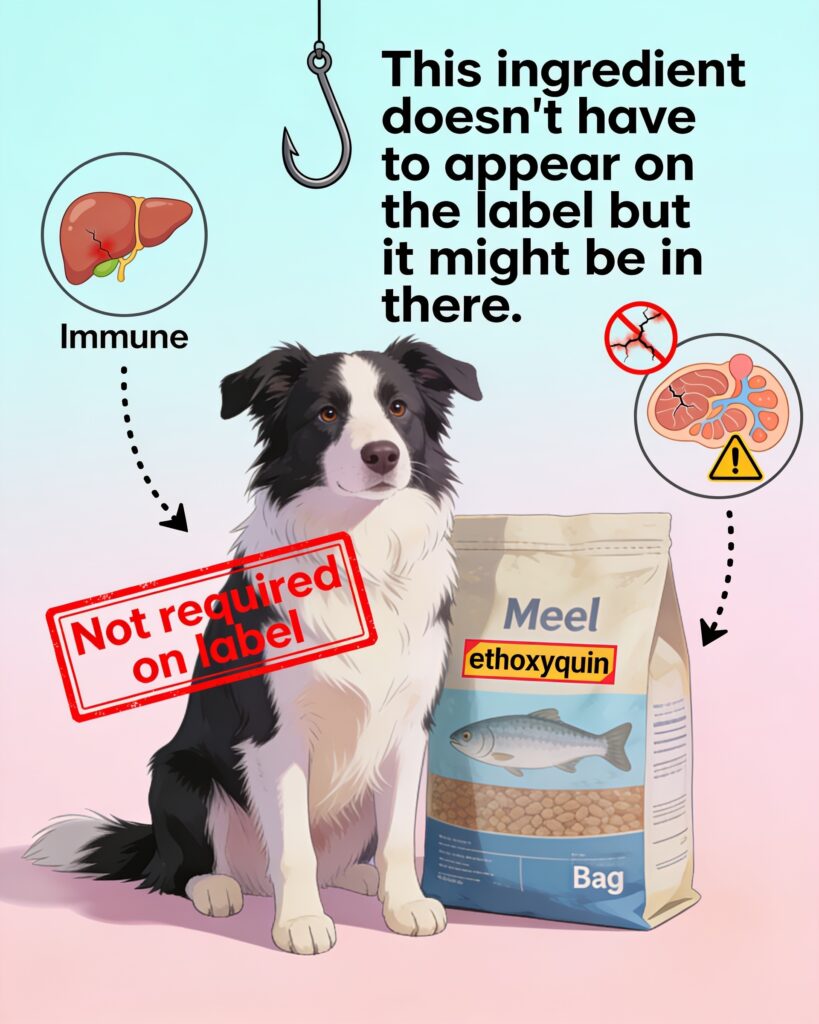
Originally developed as a pesticide, ethoxyquin is used as a preservative in some dog foods particularly in fish meal ingredients. It’s one of the most controversial ingredients in pet food and has been linked to liver damage, immune dysfunction, and cancer in dogs. The tricky part is that manufacturers who add it to fish meal before it reaches the pet food factory don’t have to list it on the label. If fish meal is listed as an ingredient, it may contain ethoxyquin even if it’s not declared.
3. Artificial Colors
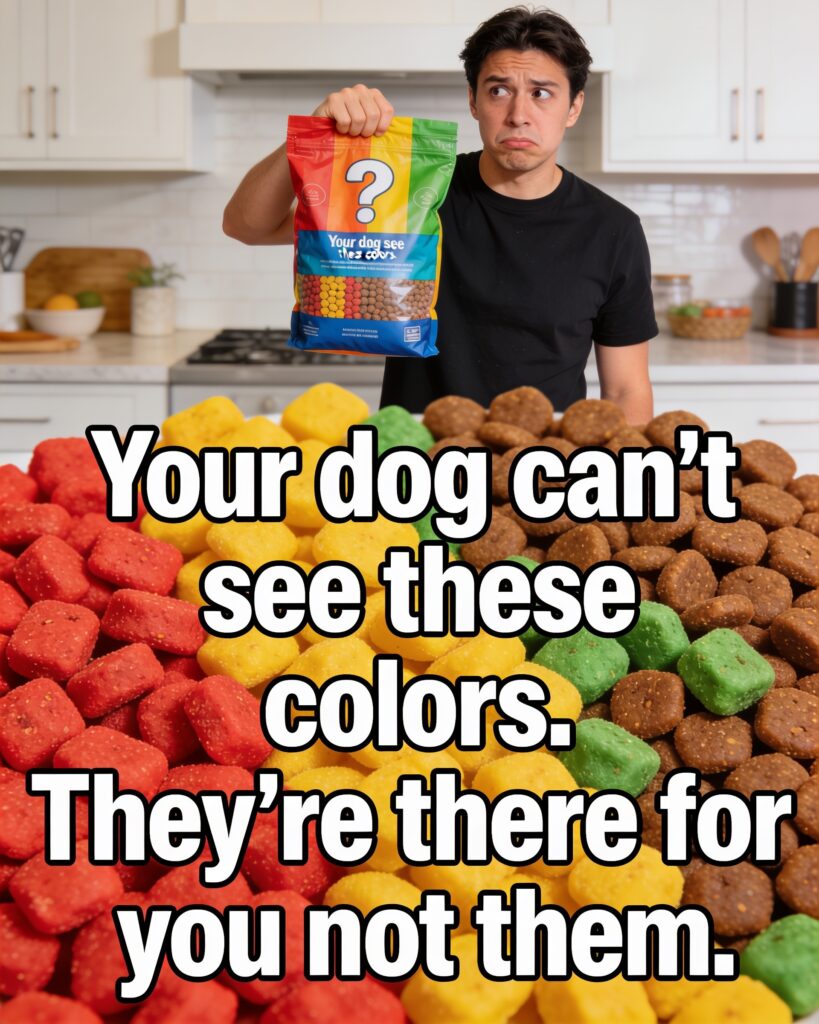
Red 40, Yellow 5, Yellow 6, Blue 2 these artificial dyes serve one purpose: making the food look more appealing to the human buying it. Dogs don’t care what color their food is. These dyes have been linked to hypersensitivity reactions, behavioral changes, and cancer in various studies. There is no nutritional benefit whatsoever. Any dog food containing artificial colors is optimizing for shelf appeal, not your dog’s health.
4. Propylene Glycol
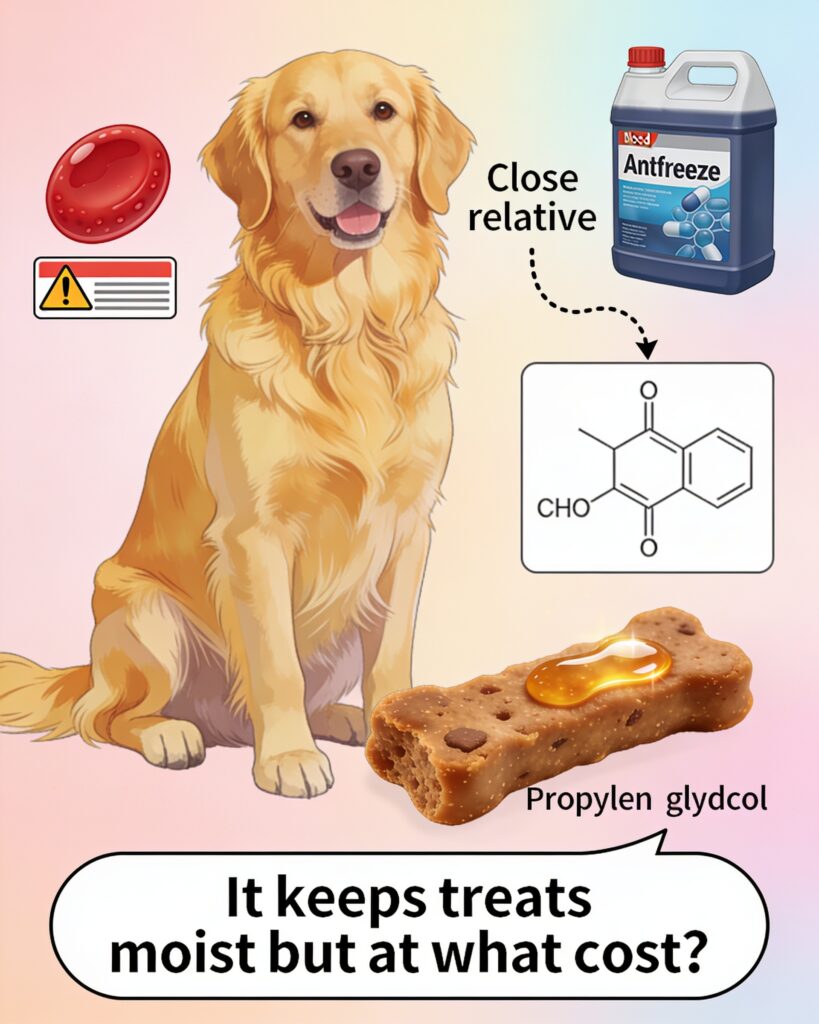
Propylene glycol is used to maintain moisture in semi-moist dog foods and treats. It’s a close relative of ethylene glycol antifreeze and while it’s considered safe in small amounts for dogs, it destroys red blood cells in cats and has raised concerns in dogs with long-term exposure. It’s an unnecessary ingredient that exists purely for texture and palatability, and any food relying on it is worth replacing.
5. Meat and Bone Meal
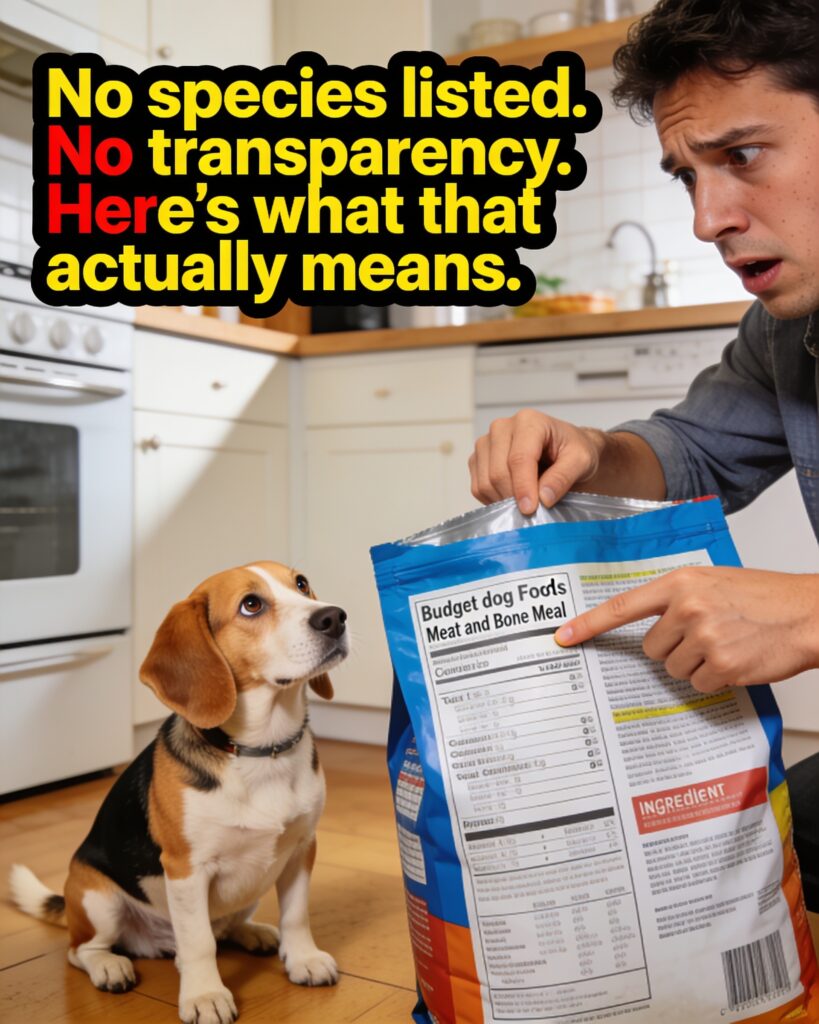
“Meat and bone meal” with no species identified is one of the most vague and potentially problematic ingredients in commercial pet food. It can legally include material from any animal including diseased livestock, restaurant waste, and in some countries, euthanized animals. Named meal “chicken meal” or “beef meal” is a different story entirely and is a concentrated, legitimate protein source. The rule is simple: if it doesn’t say which animal, don’t trust it.
6. Corn Syrup
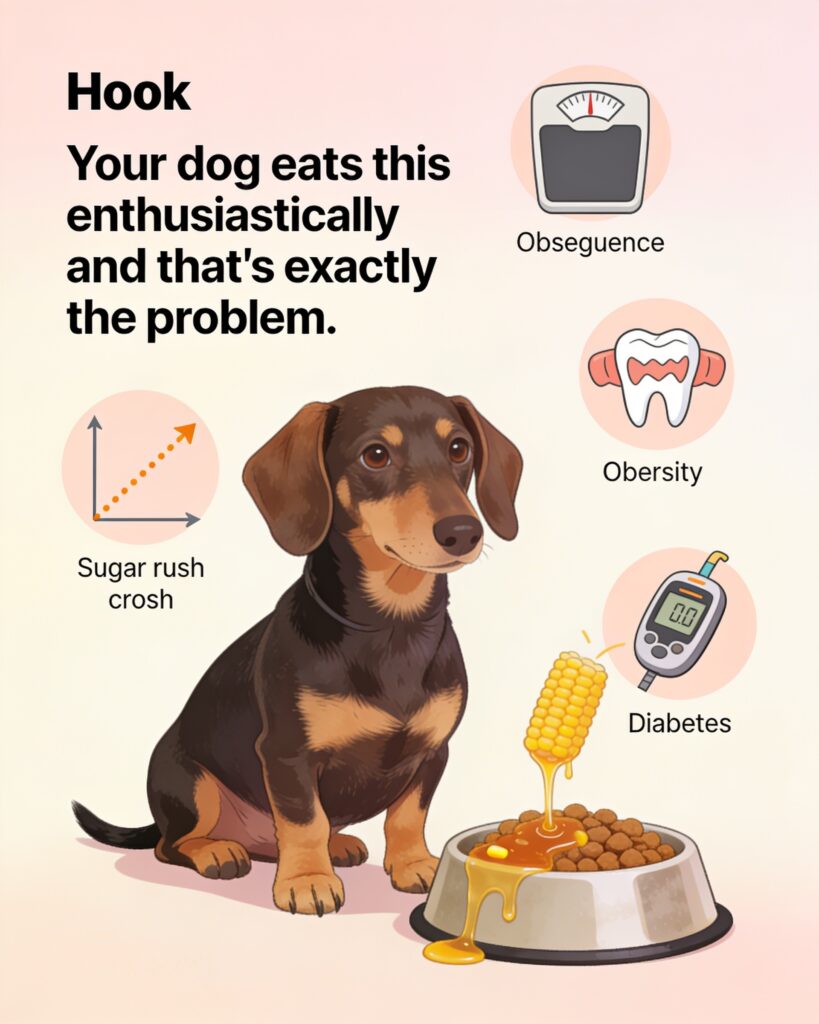
Corn syrup is added to dog food for the same reason it’s added to human junk food it makes the product taste better and keeps dogs coming back to the bowl. It contributes to obesity, dental disease, diabetes, and energy spikes followed by crashes. A dog food that needs corn syrup to be palatable is covering up poor quality ingredients with sweetness. It should never appear in a food you’d consider feeding long-term.
7. Sodium Nitrite
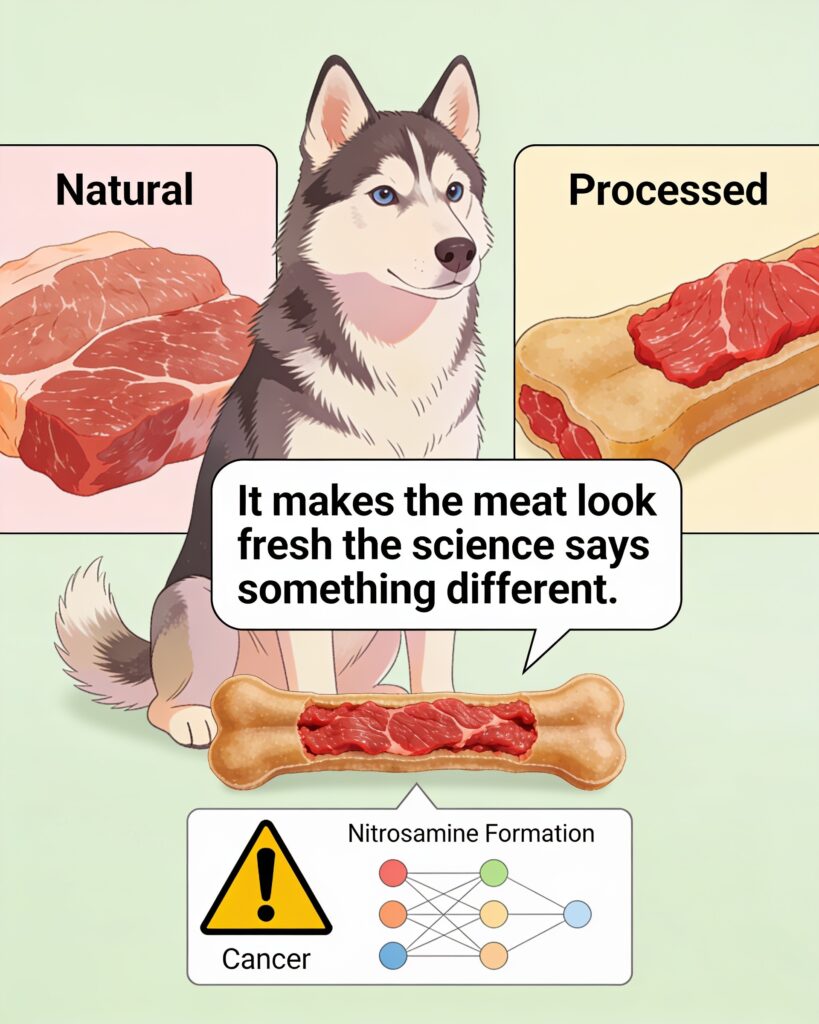
Sodium nitrite is a preservative and color fixative used in some processed dog treats and wet foods. It keeps meat looking red and fresh-looking longer than it naturally would. When metabolized, it can form nitrosamines compounds strongly linked to cancer. It’s an ingredient with a well-documented risk profile that has no place in food intended to support long-term health.
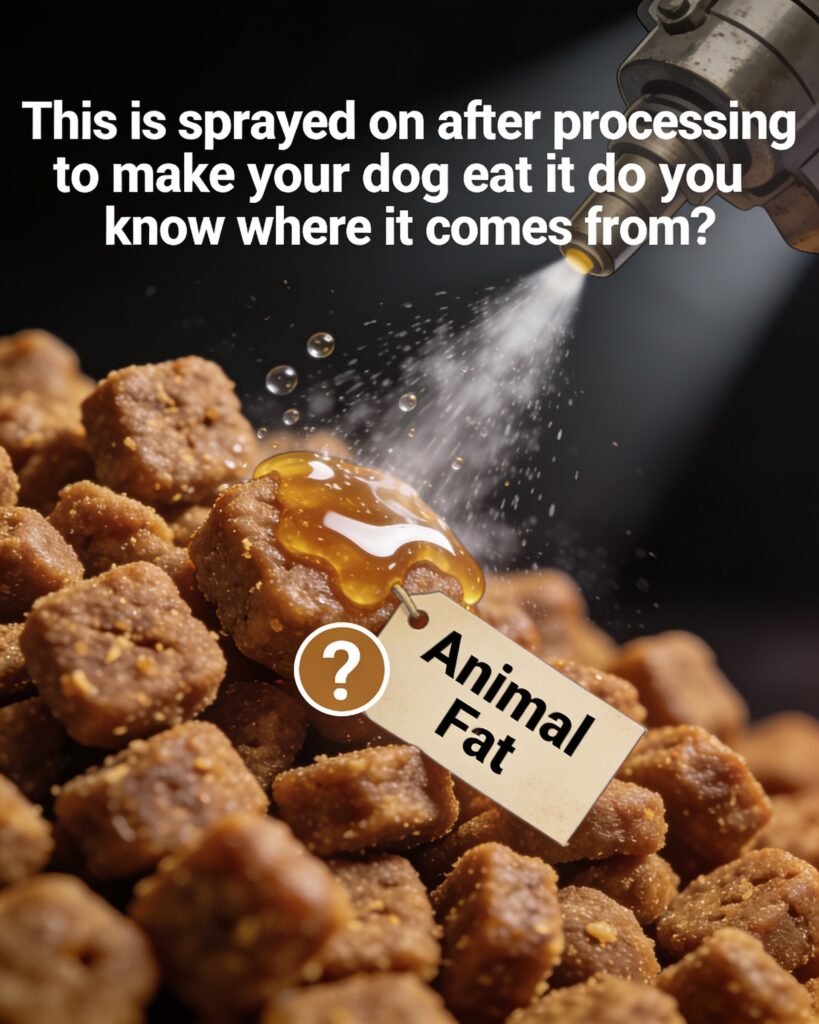
8. Rendered Fat
“Animal fat” with no species specified is rendered fat from unknown sources the same vague origin problem as unspecified meat meal. It’s sprayed onto kibble after processing to make it smell appealing and encourage eating. The fat itself isn’t necessarily harmful, but the lack of transparency about its source is a red flag about the overall quality and honesty of the manufacturer. Named fat sources “chicken fat” are acceptable and common in quality foods.
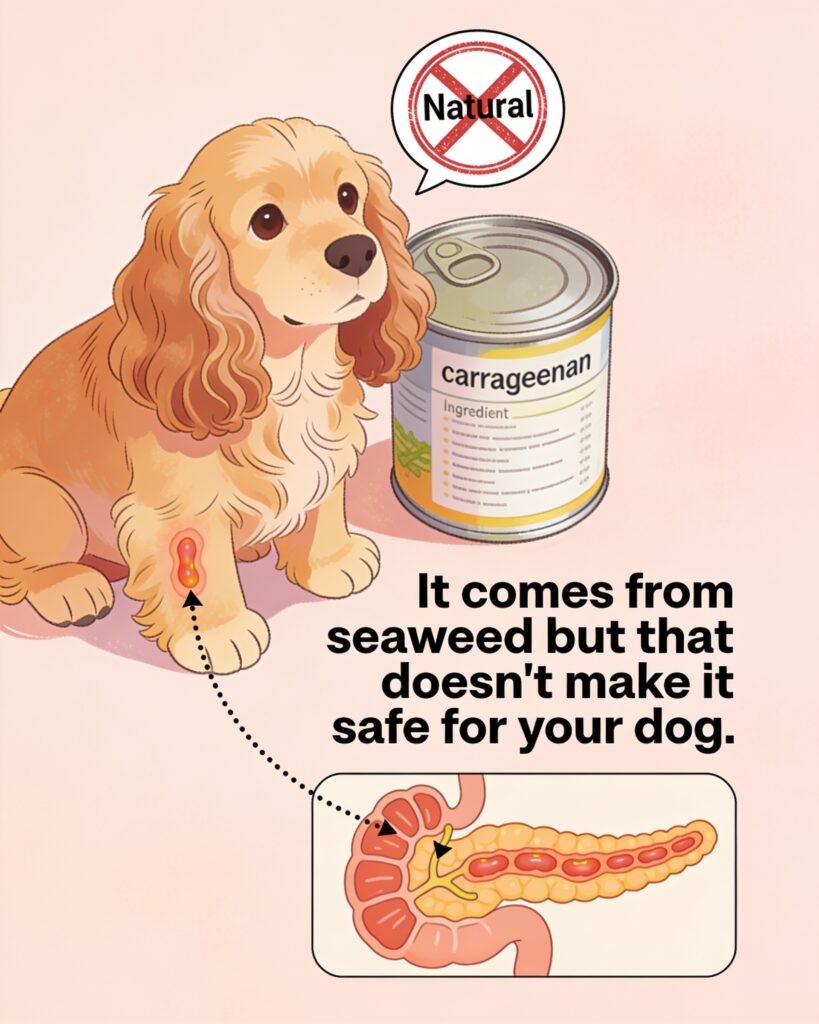
9. Carrageenan
Carrageenan is a thickening agent derived from red seaweed and used widely in wet dog foods to give them a gelatinous texture. Despite its natural origin, it has been linked to intestinal inflammation, ulcers, and digestive problems in multiple studies. It’s particularly worth avoiding for dogs with sensitive stomachs, irritable bowel issues, or known food intolerances. The fact that it comes from seaweed doesn’t make it benign.
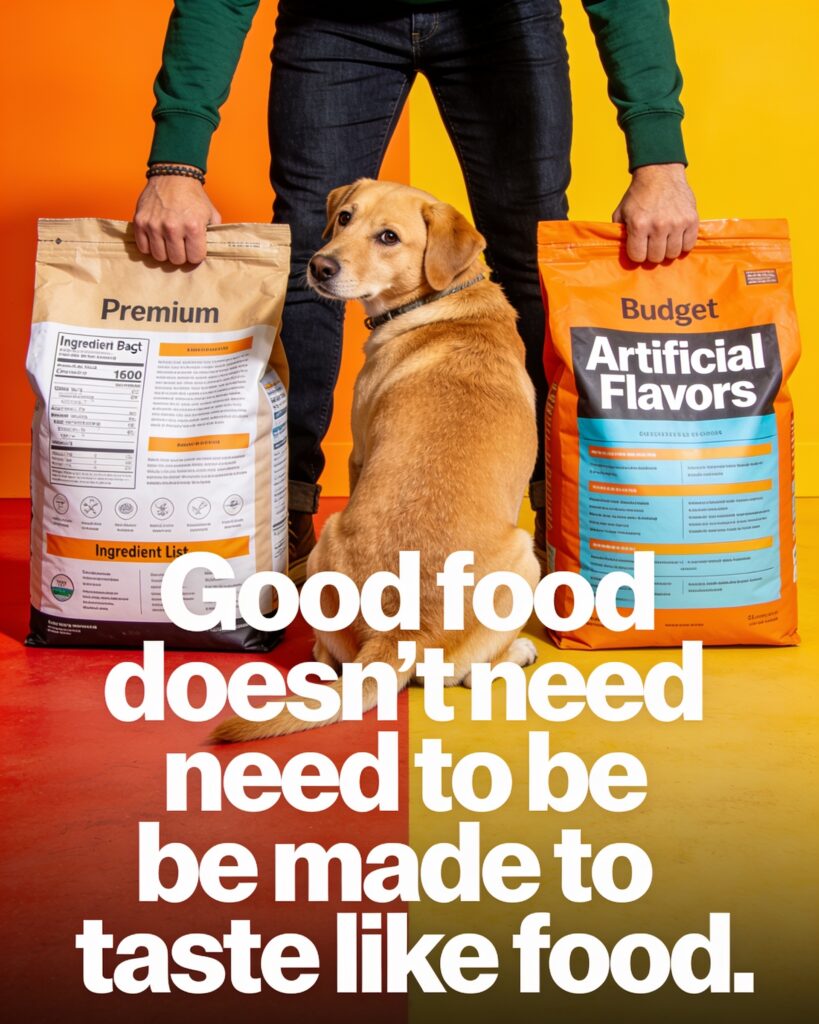
10. Artificial Flavors
“Artificial flavors” on a dog food label is a catch-all term that can hide dozens of different chemical compounds. Like artificial colors, they exist to mask low-quality ingredients and make the food more appealing. A genuinely high-quality dog food with good protein sources and whole ingredients doesn’t need artificial flavoring the food tastes good because the ingredients are good. Artificial flavors are a reliable signal of a product cutting corners.
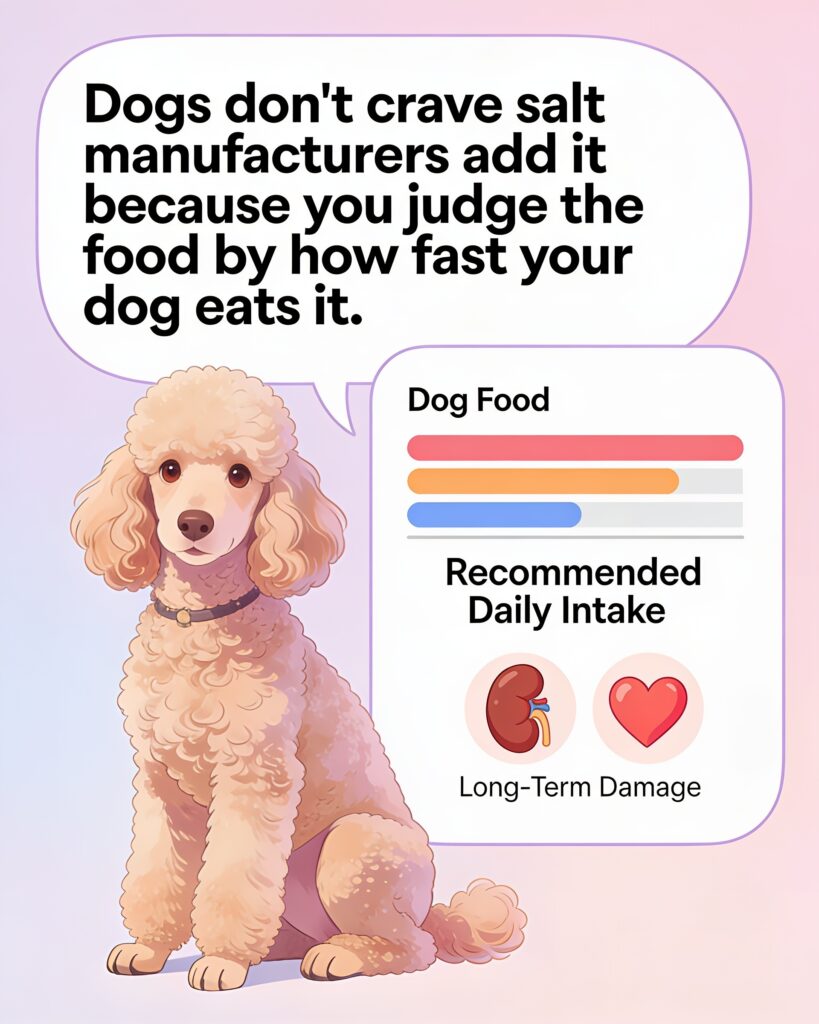
11. Excessive Salt
Some sodium is necessary in a dog’s diet, but many commercial dog foods particularly treats contain far more salt than dogs need. Excessive sodium intake over time contributes to high blood pressure, kidney disease, and heart problems. It also creates thirst that can mask other health issues. Dogs don’t need their food to be salty that preference is entirely human, and manufacturers exploit it because owners often judge food palatability by how enthusiastically their dog eats it.
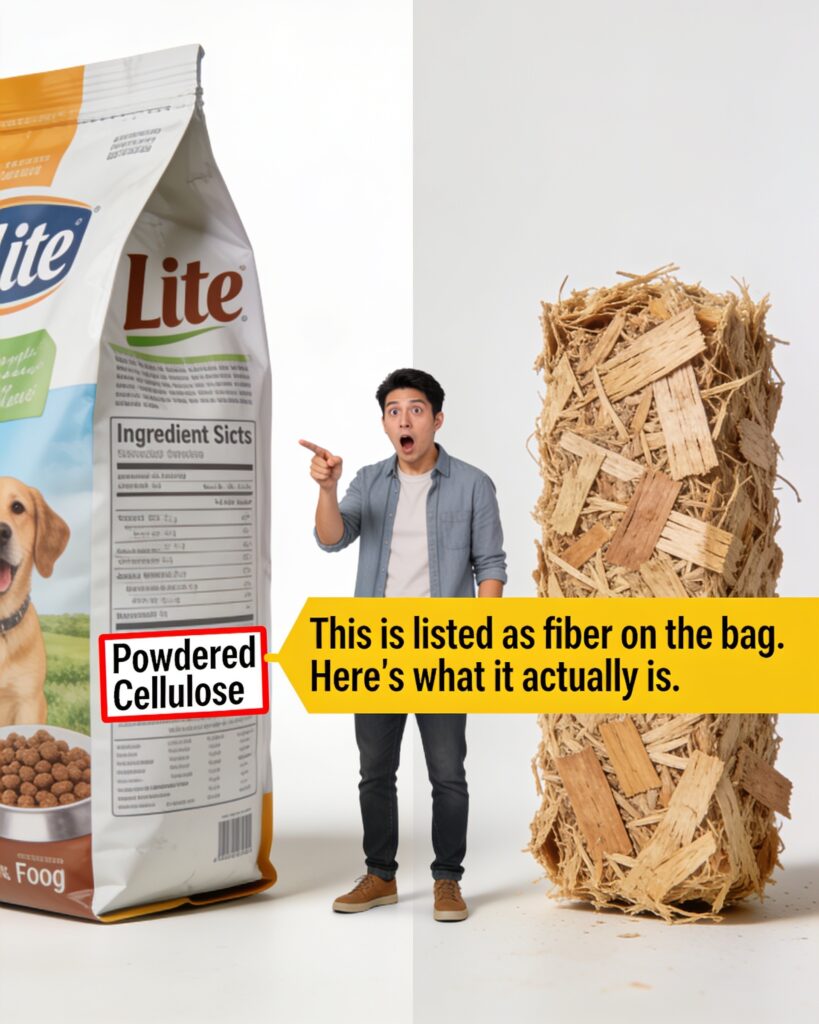
12. Cellulose (Wood Pulp)
Cellulose often listed simply as “powdered cellulose” is processed wood pulp added to dog food as a fiber source and calorie diluter. It’s used primarily in “lite” or weight management formulas to add bulk without nutrition. While small amounts of cellulose aren’t directly harmful, it’s a cheap, nutritionally empty filler that replaces ingredients with actual value. A dog food using wood pulp as a meaningful fiber source is telling you a lot about its priorities.